

Description
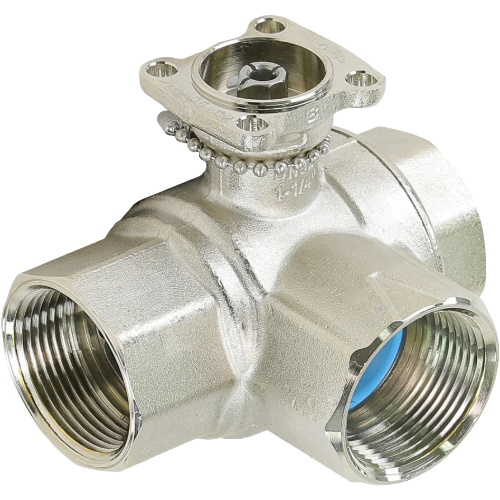
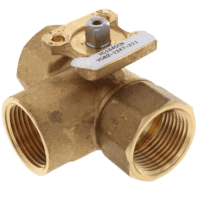
Belimo B330 3-Way Ball Valve Overview
The Belimo B330 is a precision-engineered 3-way ball valve designed for reliable flow control in commercial and industrial HVAC hydronic systems. Built with a nickel-plated forged brass body and a stainless steel ball and stem, this valve delivers long-lasting durability and corrosion resistance in both chilled water and hot water applications. With a maximum operating temperature of 250°F, the B330 is well-suited for demanding heating and cooling coil control applications.
Flow Characteristics
The B330 features a dual-port flow design engineered for precise hydronic balancing:
- A-port: Equal percentage flow characteristic for smooth, proportional control response
- B-port: Modified flow characteristic designed to maintain constant flow at the common port
- Flow coefficient (Cv): 19
- Configuration: 3-way mixing or diverting service
Construction & Materials
- Body: Nickel-plated forged brass for superior corrosion resistance
- Ball and stem: Stainless steel for durability and long service life
- Connection type: NPT (National Pipe Thread) threaded end connections
- Pipe size: 1-1/4 inch
Operating Parameters
- Maximum fluid temperature: 250°F
- Suitable media: Chilled water and hot water hydronic systems
- Valve type: Ball valve, 3-way
- Cv rating: 19
Applications
The Belimo B330 is ideal for use in a wide range of commercial HVAC hydronic applications, including:
- Fan coil unit (FCU) chilled and hot water control
- Air handling unit (AHU) coil control
- Variable air volume (VAV) system hydronic loops
- Building automation and energy management systems
- Mixing and diverting service in two-pipe and four-pipe hydronic systems
Why Choose the Belimo B330?
Belimo is a globally recognized leader in actuator and valve technology for HVAC systems. The B330 ball valve is designed to pair seamlessly with Belimo actuators, providing a complete, factory-matched valve-actuator assembly. The equal percentage A-port characteristic ensures stable control across varying load conditions, while the modified B-port flow design maintains consistent common port flow — reducing system imbalance and improving overall energy efficiency.


Reviews
There are no reviews yet.