
Gas Detection
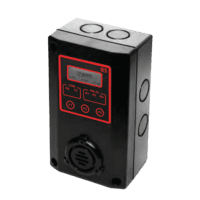
Choose the right gas and detection range for your application: CO and NO₂ for parking garages, CH₄ (natural gas) for boiler rooms, or CO₂ and specialty gases for labs and loading docks. Then pair it with a sensor or transmitter that offers the outputs your job requires, such as relays or 4–20 mA / 0–10 V signals.
These systems can be networked to a central controller for automatic fan or alarm activation, with options for visual and audible alerts. Many models integrate directly into your BAS for smarter ventilation control and code compliance.
Showing 1–16 of 19 resultsSorted by popularity
-
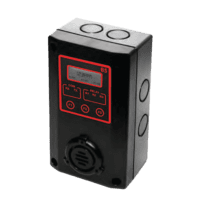
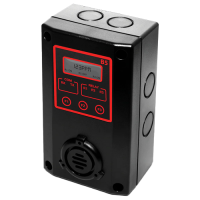
Smart Gas Transmitter B5-CO2-5000P-0-A B5 Carbon Dioxide, Infrared, 0-5000PPM
$1,107.07Add to Cart for Savings -
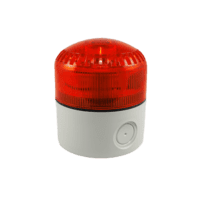
QEL M-Strobe Multifunctional LED Beacon/Sounder Alarm For Gas Detection & Alarm Systems
$442.83Add to Cart for Savings
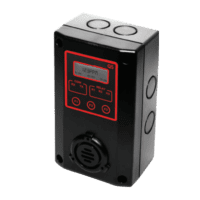




How to Choose Your Gas Detection Setup
1. Identify Your Area & Gas
Start by matching each space with the right gas type: garages (CO/NO₂), mechanical rooms (CH₄/natural gas), loading docks (CO), and labs or warehouses (CO₂ or other specialty gases). Mount sensors and transmitters at the proper height for each gas type to ensure accurate readings.
2. Build Your Control Strategy
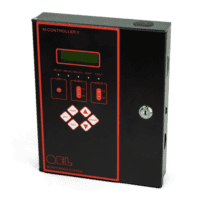
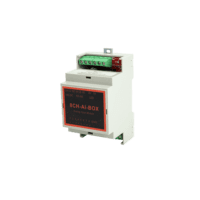
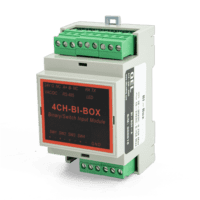
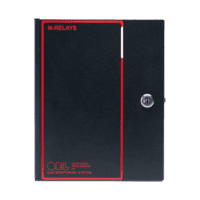
Use the M-Controller 2 as your system hub. Add relay or I/O modules as fan stages, alarm points, or coverage zones to expand. It scales easily as your project grows.
3. Integrate with Your BAS
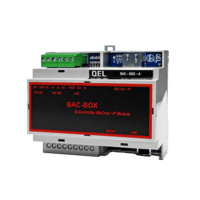
Add the BAC-BOX-0 for full BACnet/IP visibility including alarms, real-time concentrations, and sensor status to keep your building automation system in sync.
4. Add Annunciation for Safety
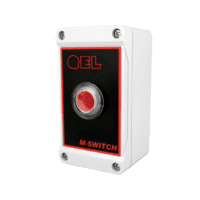
For local visual and audible alerts, pair M-Strobe beacons with an M-Annunciator so on-site staff can acknowledge alarms quickly and safely.
5. Protect and Verify
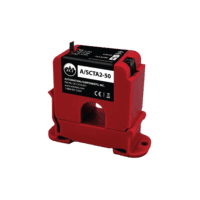
Mount modules in IO-BOX-0 NEMA 4X enclosures for protection against dust and moisture. Add an ACI current sensor on exhaust fans to meet code requirements for fan-proof verification.
