How to Choose the Right Dehumidifier for Whole-Home, Basement, or Crawlspace
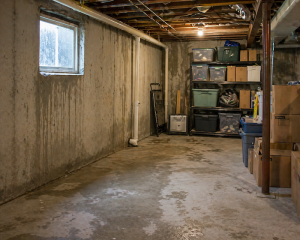
If your basement smells musty, your crawlspace stays damp, or your home still feels clammy even when the air conditioner is running, excess humidity may be the problem. The right dehumidifier can help reduce moisture, improve comfort, and protect the home from long-term issues tied to damp indoor air.
High humidity can do more than make a space feel uncomfortable. Over time, excess moisture can contribute to mold and mildew growth, worsen indoor air quality, cause condensation, and affect areas of the home that are already prone to moisture problems. Whether the issue is isolated to a basement or crawlspace or affects comfort throughout the home, choosing the right dehumidifier is an important step toward more reliable humidity control.
Many homeowners assume that if the air conditioner is working, indoor humidity should already be under control. In reality, a home can reach the desired temperature and still feel damp or sticky.
Basements, crawlspaces, sealed attics, and other moisture-prone areas often need more dedicated humidity control than the cooling system alone can provide. This is especially true during humid weather or in spaces where moisture buildup is persistent. A dehumidifier helps address that gap by removing excess moisture directly, which can improve comfort while helping protect finishes, stored items, and the building structure.
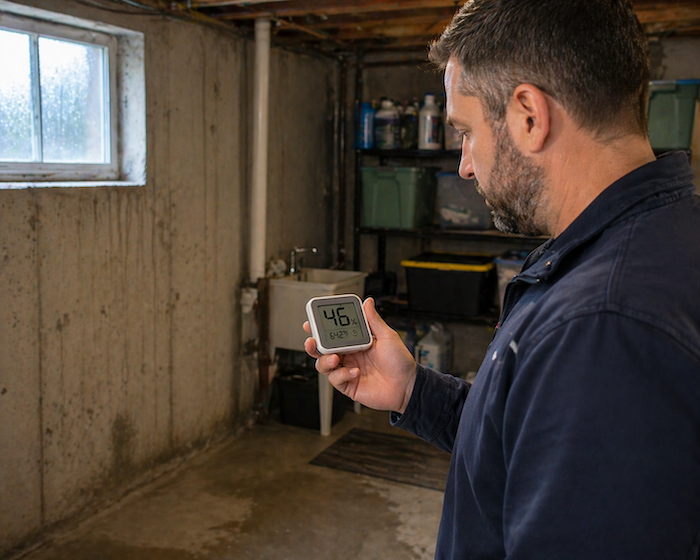
Before choosing a dehumidifier, it helps to understand how much moisture is actually present in the space. One of the simplest ways to check is with a hygrometer, which measures indoor relative humidity.
In most homes, a relative humidity range of about 30% to 50% is a common target. If a basement, crawlspace, or living area regularly stays above that range, excess moisture may be contributing to comfort issues and creating conditions that support mold, mildew, and musty odors. Humidity readings are a useful starting point, but visible or noticeable signs of moisture also matter. A damp smell, clammy feel, or recurring condensation can all point to a humidity problem that needs more than cooling alone.
Square footage matters, but it should not be the only factor driving the decision. Two spaces of the same size can need very different dehumidifier solutions depending on how damp they are, how the home is built, and where the moisture issue is occurring.
When comparing dehumidifiers, capacity is usually listed in pints per day. That number refers to how much moisture the unit can remove from the air over a 24-hour period under standard conditions. Lower-capacity models may be enough for smaller or lighter-duty moisture issues, while higher-capacity systems are often better suited for whole-home applications or areas with more persistent moisture loads.
The better approach is to match the unit to the application, not just the room size. If the goal is long-term humidity control in a demanding space, moisture severity, installation conditions, and drainage needs are just as important as square footage.
Some spaces need more than a basic moisture-control solution. Signs that a stronger or more application-specific dehumidifier may be needed include:
When these issues are persistent, choosing a dehumidifier designed for the space and moisture load usually leads to better comfort and more reliable long-term results.
Not every dehumidifier is designed for the same type of installation. A better way to shop is to start with the application.
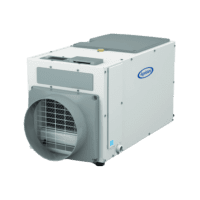
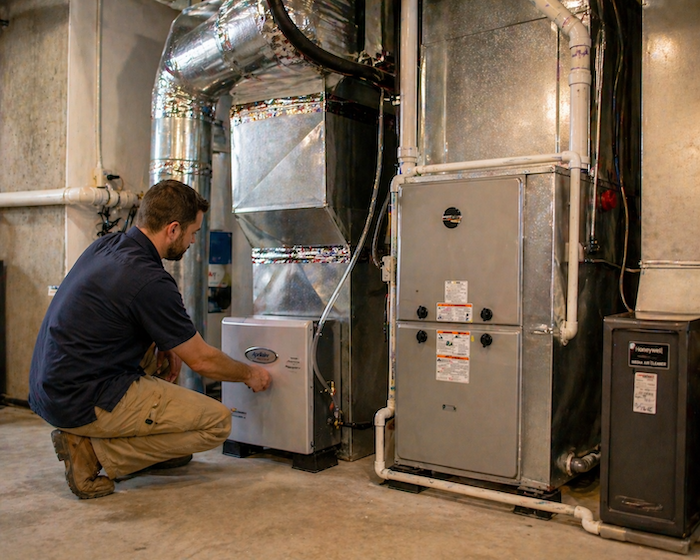
Whole-home dehumidifiers are designed to manage humidity across larger areas and often work alongside the HVAC system. They are a strong option when the goal is broader comfort, better moisture control throughout the living space, and long-term protection for the home.
These systems are often a good fit for:
Some dehumidifiers are better suited for below-grade or enclosed spaces where moisture tends to build up. These applications often call for dependable operation, continuous drainage, and a design that works in tighter installation areas.
These units are often a good fit for:
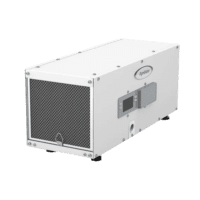
In some homes, the best dehumidifier is the one that can realistically fit the jobsite. Compact models can be especially useful in low-clearance crawlspaces, tight mechanical rooms, garages, or retrofit applications where installation space is limited.
If physical space is one of the main challenges, a compact installed unit may offer a more practical solution than trying to force a larger system into the area.
Some dehumidifiers offer Wi-Fi connectivity or advanced control options that make it easier to monitor humidity, adjust settings, and receive alerts. These features can add convenience for homeowners and may also simplify service or follow-up.
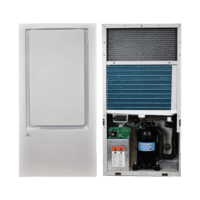
In some retrofit projects or applications where HVAC integration is not ideal, a standalone or in-wall dehumidifier may be the better fit.
Drainage is one of the most important practical details to consider before selecting a dehumidifier. Many installed systems are designed for continuous drainage, which can make them far more convenient for long-term use.
In some applications, gravity drainage is enough. In others, a condensate pump or another drainage solution may be needed to move water to a suitable drain location. Before choosing a unit, it helps to ask:
Planning for drainage early can help avoid installation headaches and support more dependable performance over time.
Not every feature is essential, but the right feature set can make a big difference in everyday usability and long-term satisfaction.
Depending on the application, useful features may include:
In a crawlspace or basement, simple and reliable operation may be the priority. In a whole-home application, control options, connectivity, and system integration may matter more. Choosing features based on how the homeowner will use the system often leads to a better fit.
A dehumidifier may run frequently during humid seasons or in spaces with ongoing moisture exposure, so energy use is worth considering.
An efficient dehumidifier can help improve comfort and control humidity without adding as much strain to utility costs. It can also reduce the need to overcool the house just to make the air feel drier. In many homes, better humidity control makes the space feel more comfortable at normal thermostat settings, which makes dehumidification an important part of comfort, not just moisture removal.
Like other indoor comfort equipment, a dehumidifier performs best when it is maintained regularly.
A few simple steps can help support efficiency and reliability over time:
Routine maintenance helps the system do its job more consistently and may reduce service issues over time.
The best dehumidifier is the one that matches the moisture problem, the installation space, and the long-term needs of the home.
A whole-home dehumidifier may be the right fit for broad comfort and humidity issues throughout the house. A compact installed unit may make more sense for a damp basement or crawlspace. In other cases, smart controls, drainage requirements, or retrofit limitations may help narrow the choice.
When the unit fits the application, the benefits go beyond drier air. The home can feel more comfortable, indoor spaces can stay better protected, and ongoing moisture problems may become much easier to manage.
© Copyright 2026. All Rights Reserved.