
Electric Heat Sequencers
Electric heat sequencers stage electric heat strips (and the blower) on timed delays so elements don’t energize all at once—reducing inrush current, light flicker, and breaker trips while delivering smoother, more comfortable heat.
Our selection focuses on proven White-Rodgers 24A34-series sequencers in single- and two-switch configurations with 1–20 or 1–30 second on-timing and 24-V control—direct replacements for common fan/heat sequencing functions in air handlers and heat pumps.
Shop reliable, in-stock sequencers at Jackson Systems & Supply to get the right timing and switch count fast.
Showing all 5 resultsSorted by popularity
-
MSRP: $30.34You save 55%
-
MSRP: $30.34You save 55%
-
MSRP: $26.98You save 51%
-
MSRP: $28.51You save 15%
-
MSRP: $37.13You save 15%
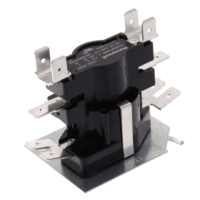
What is an Electric Heat Sequencer?
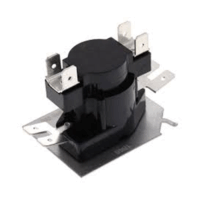
Electric heat sequencers are time-delay relays used anywhere electric resistance heat needs to be brought on (and off) in stages to avoid big inrush current.
What the Sequencer Does
- Stages the heat strips on delays (e.g., first strip after ~10–30 s, next strip(s) after additional delays).
- Prevents inrush spikes and nuisance breaker trips by not energizing all strips at once.
- Often brings the blower on with a delay and keeps it running briefly after heat drops out to purge residual heat.
Where It Sits
Mounted on the electric heat kit/element rack. Each sequencer has a 24-V coil and one or more line-voltage contact sets feeding individual strip heaters (and sometimes a fan circuit).
Typical Control Sequence (Heat Call)
Thermostat call
- W1 → 24 VAC sent to the first sequencer coil (usually through the unit’s limit/rollout safety string).
- On heat pumps, AUX/W2 from the stat or a defrost board can energize additional sequencer coils.
First stage ON delay
- After the built-in delay, contacts close → first heat strip (e.g., 5 kW) energizes.
- Some sequencers also close a blower contact (line-voltage fan lead or a low-voltage feed to the fan relay).
Additional stages
- If demand persists (W2/W3 or internal staging), other sequencer coils energize → remaining strips come on one by one with their own delays.
Call ends → OFF delays
- 24 V is removed; coils cool; contacts open after a short delay (so strips don’t all drop at once).
- Blower may run a bit longer via the sequencer’s fan contact to clear heat and avoid limit trips.
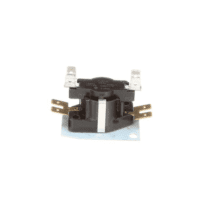
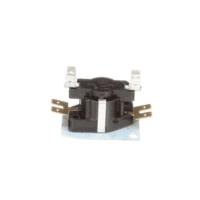
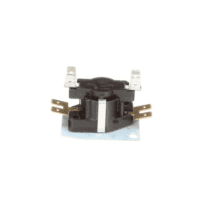
For example, the White-Rodgers 24A34-1, is a single-stack time-delay sequencer (24 V control coil; one switch) that will bring one heat circuit on after a short delay, then drop it out after a delay.
When Does a Heat Sequencer Go Bad or Fail?
They “go bad” when cumulative heat and arcing wear out the heater/bi-metal and contacts—often after many seasons or in systems that short-cycle or overheat.
Common Failure Conditions
- Contact wear/arc-welding: High inrush from heat strips pits contacts; they stick closed (heat won’t shut off) or burn and stay open (no heat).
- Heater/bi-metal fatigue: The internal 24 V heater or bi-metal loses calibration or opens → no “stage-up,” erratic timing, or very long delays.
- Overheat & cycling abuse: Dirty filters/low airflow trip limits; repeated hot/cold cycles cook the sequencer and spade terminals.
- Electrical issues: Low/high control voltage, loose push-on terminals, or backfed circuits overheat contacts.
- Moisture/corrosion & vibration: Especially in RTUs/attics; leads to intermittent operation.
Symptoms
- Heat strips never come on (24 V is present at the sequencer coil but no amp draw after 30–90 s).
- Heat won’t shut off (stuck contacts; strips stay energized after the call ends).
- Wrong staging (all strips slam on at once → lights dim/breaker trips; or only some stages ever energize).
- Limit trips or scorched/crumbly terminals at the sequencer.
- Timing drift (delays far outside nameplate).
Quick Checks
- Visual & tug test (power off): look for heat-darkened plastic, loose terminals, brittle insulation.
- Coil/heat element test: isolate the 24 V terminals; ohm them. Open/infinite Ω = bad. (Exact Ω varies by model.)
- Live test: call for heat, verify 24 V at coil; within spec delay the contacts should close. Use a clamp meter on each strip to confirm staging.
- Voltage drop across closed contacts: should be ~0–0.3 V. Higher = pitted/high-resistance contact → replace.
- Rule out look-alikes: open limits, failed heating element, bad transformer/thermostat wiring, or a tripped breaker.
Replacement Tips
- Match coil voltage, # of stages/poles, contact amp rating, and timing.
- If one section in a multi-stack is bad, replacing the entire sequencer and any cooked terminals is usually faster and more reliable.
- After replacement, verify airflow and filter condition to prevent repeat overheating.
