
Motors
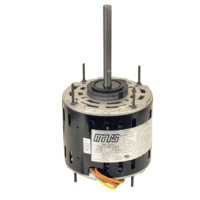
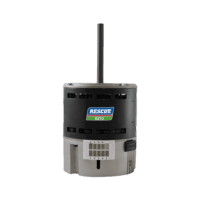
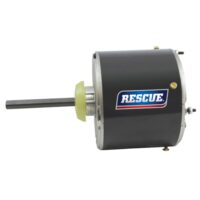
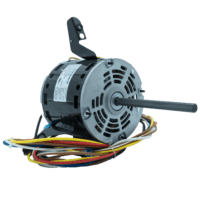
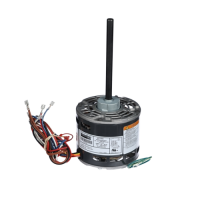
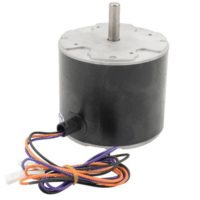
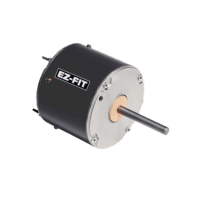
Motors are essential to HVAC and refrigeration performance because they provide the rotating force needed to move air, drive fans and blowers, and support critical system functions such as combustion air, condenser airflow, and zone control. Jackson Systems & Supply offers options for general purpose replacement, blower, condenser fan, ECM, fan, actuator applications and more.
Showing 1–48 of 800 resultsSorted by popularity
-
MSRP: $78.49You save 15%
-
MSRP: $60.08You save 15%
-
MSRP: $143.74You save 15%
-
MSRP: $109.76You save 15%
-
MSRP: $339.24You save 15%
-
MSRP: $172.49You save 15%
-
MSRP: $147.29You save 15%
-
MSRP: $285.10You save 15%
-
MSRP: $98.65You save 13%
-
Sale!
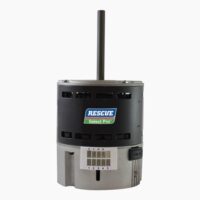
Direct Drive Motor, Replaces Selectech X13 and EnduraPro
Original price was: $304.99.$257.99Current price is: $257.99.MSRP: $359.89You save 28% -
MSRP: $144.89You save 15%
-
MSRP: $150.21You save 15%
-
MSRP: $132.17You save 15%
-
MSRP: $110.33You save 15%
-
MSRP: $168.76You save 13%
-
MSRP: $181.74You save 13%
-
MSRP: $83.75You save 15%
-
MSRP: $146.04You save 15%
-
MSRP: $177.07You save 15%
-
MSRP: $160.94You save 13%
-
MSRP: $274.87You save 13%
-
MSRP: $123.31You save 15%
-
MSRP: $149.49You save 15%
-
MSRP: $44.42You save 15%
-
MSRP: $115.76You save 18%
-
MSRP: $136.64You save 15%
-
MSRP: $75.81You save 15%
-
MSRP: $582.57You save 13%
-
MSRP: $233.96You save 15%
-
MSRP: $113.84You save 15%
-
MSRP: $129.94You save 13%
-
MSRP: $24.14You save 15%
-
MSRP: $113.72You save 15%
-
MSRP: $259.37You save 15%
-
MSRP: $185.25You save 15%
-
MSRP: $161.24You save 15%
-
MSRP: $188.04You save 15%
-
MSRP: $123.86You save 15%
-
MSRP: $191.74You save 15%
-
MSRP: $273.94You save 15%
-
MSRP: $478.68You save 15%





More About Motors
Blower Motors
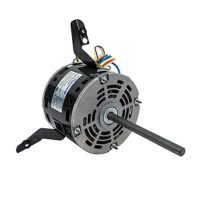
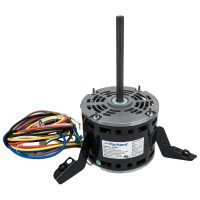
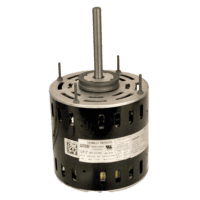
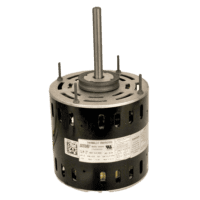
Blower motors are used to move conditioned air through furnaces, air handlers, and duct systems. They are the best fit when the motor’s main job is delivering indoor airflow against system static pressure, which is why speed taps, horsepower, RPM, frame size, and shaft dimensions all matter. When choosing a replacement, match more than voltage alone. Blower performance depends heavily on the correct speed configuration and physical fit.
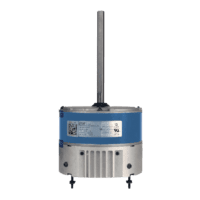
Condenser Fan Motors
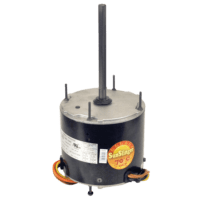
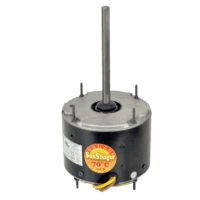
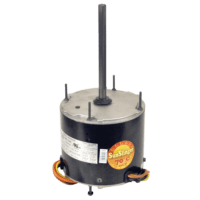
Condenser fan motors are designed to move outdoor air across the condenser coil so the system can reject heat effectively. They are commonly used in condensing units and heat pumps, where outdoor-duty construction and correct rotation are especially important. A helpful tip when choosing is to verify RPM, rotation, frame, shaft length, and capacitor requirements, because even a motor with the right voltage and horsepower may not deliver proper airflow if those details do not match.
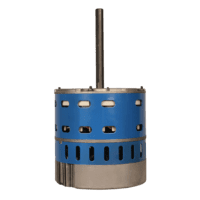
ECM and Variable-Speed Motors
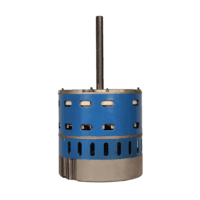
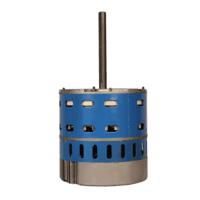
ECM and variable-speed motors are used where improved efficiency, quieter operation, and more precise airflow control are needed. Unlike standard PSC motors, these motors use onboard electronics to adjust motor output, which can help maintain airflow more consistently as system conditions change. When selecting one, pay close attention to control compatibility, module style, and application type, since ECM replacements are not simply one-for-one substitutes for standard capacitor motors.
PSC Motors
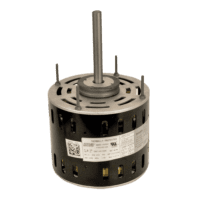
PSC motors are common in many residential and light commercial HVAC applications because they offer dependable operation and relatively simple replacement. They are often used in blower and condenser fan applications where a run capacitor helps the motor operate efficiently and reliably. One important thing to check is capacitor value and wiring setup, because PSC motor performance depends on the correct capacitor and speed lead configuration.
General Purpose Motors
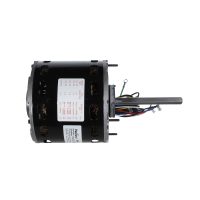
General purpose motors are used across a wide range of replacement applications where the motor may serve as a drive source for fans, blowers, pumps, or other equipment. Their versatility makes them useful, but it also means they should be selected carefully based on the exact mechanical and electrical requirements of the original application. A good rule is to confirm voltage, phase, horsepower, RPM, frame, enclosure, and shaft dimensions before ordering, since general purpose does not mean universally interchangeable.
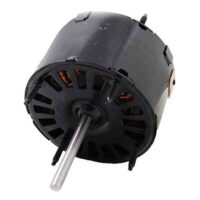
Fan Motors
Fan motors are typically used in lighter-duty air movement applications such as ventilators, exhaust systems, humidifiers, refrigeration equipment, and other compact fan assemblies. These motors are often selected for steady airflow rather than high static-pressure duct performance. When choosing one, check mounting style, rotation, shaft length, and whether the motor is designed for continuous-duty ventilation or a more specialized fan application.
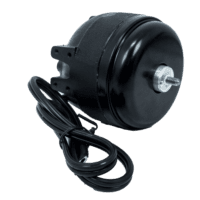
Unit Bearing Motors
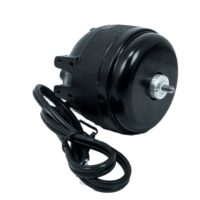
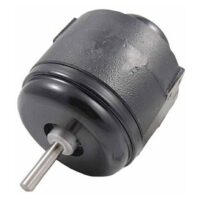
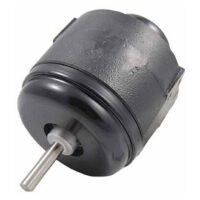
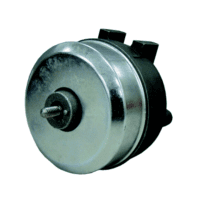
Unit bearing motors are commonly used in refrigeration and evaporator or condenser fan applications where compact size and reliable operation are important. These motors are often smaller and may be rated by wattage rather than horsepower, which makes them a little different from larger HVAC motors. A useful tip is to verify watt rating, RPM, mounting pattern, and shaft size, because these details are often more important than trying to match by appearance alone.
C-Frame and Small Fan Motors
C-frame and other small fractional horsepower fan motors are used in compact equipment such as bath fans, small blowers, ventilation units, and similar light-duty assemblies. Their design makes them a practical choice where space is limited and the load is relatively small. When choosing one, look closely at mounting configuration, rotation, shaft dimensions, and overall motor diameter, since small motor replacements are often highly application-specific.
Inducer, Draft, and Vent Motors
Inducer and vent motors are used in combustion systems to move draft air and help carry combustion gases through the heat exchanger and venting path. Because they support safe combustion and venting, they are selected for a very different job than a standard blower or fan motor. A key tip is to match the motor or assembly to the exact furnace or venter application, including RPM, rotation, and mounting, because incorrect venting performance can affect both operation and safety.
Damper Motors and Actuators
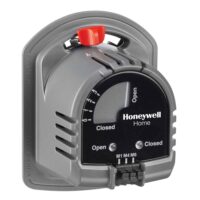
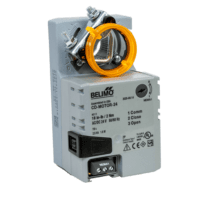
Damper motors and actuators are used to position dampers for airflow control in zoning and ventilation systems. Instead of continuously spinning a fan or blower, these motors rotate to open, close, or modulate a damper based on the control signal. When choosing one, be sure to confirm voltage, torque, timing, and control type such as two-position, floating, or modulating, because the actuator has to match both the damper and the control strategy to work properly.
Confirm the Part Number When Choosing
Start with the original part number whenever possible, then confirm the full set of electrical, mechanical, and application details. Motor replacements are often won or lost on the smaller specs—RPM, rotation, frame, capacitor, mounting, shaft size, and control compatibility—not just the headline specs like voltage and horsepower.
